Custom Plastic Welding for Tank Repair: A Smarter Fix for Cracks and Leaks
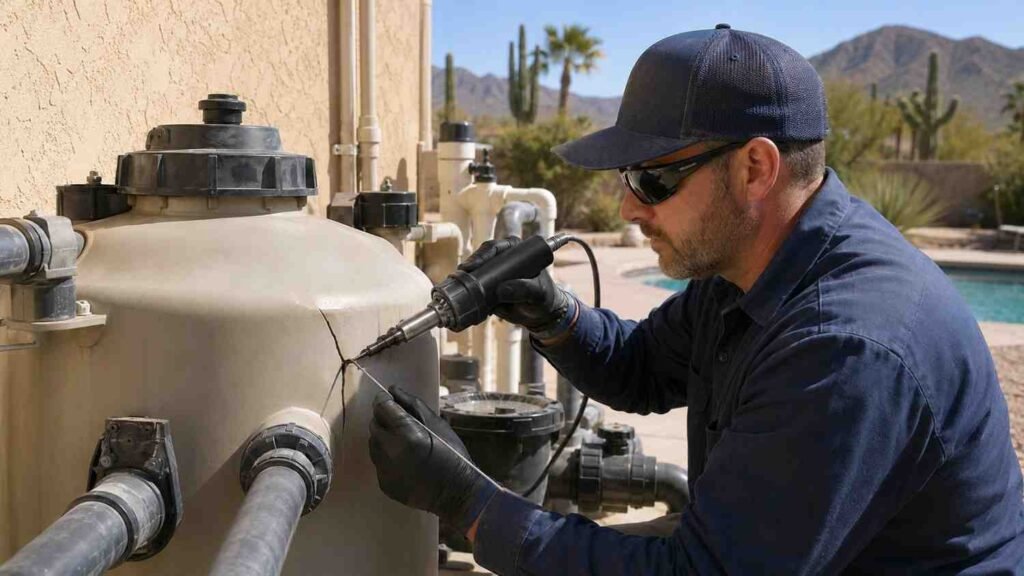
Many cracked or leaking plastic tanks can be repaired when the plastic is weldable, the damage is limited, and the surrounding tank wall is still strong.
For homeowners, pool service companies, facility teams, and businesses looking for swimming pool tank repair in Arizona, the right first step is a proper repair check: material, leak source, crack location, and tank condition.
At Instant Display Cases, we provide custom plastic welding for tanks, plastic pipes, pool collector tanks, backyard pool leaks, RV freshwater tanks, chemical tanks, and related plastic components across Arizona.
What is custom plastic welding for tank repair?
Custom plastic welding is a repair method that uses controlled heat and compatible plastic material to fuse damaged plastic surfaces together.
Instead of covering a crack from the outside, welding works with the tank material. The damaged area and repair material are heated, joined, and shaped so the repair becomes part of the plastic surface.
This matters because plastic tanks deal with water weight, pool-system pressure, outdoor heat, vibration, and constant use. A repair needs to hold under those conditions.
Custom plastic welding is commonly used on weldable plastics such as:
- HDPE
- PVC
- ABS
- Polypropylene
The repair method should match the material. HDPE, PVC, ABS, and polypropylene do not all respond the same way to heat, filler material, or surface preparation.
Can a cracked swimming pool tank be repaired instead of replaced?
Yes, a cracked swimming pool tank can often be repaired when the crack is contained to one area and the plastic around it is still strong enough to hold a weld.
If you are looking for swimming pool collector tank repair in Phoenix, the important question is whether the tank wall, seam, flange, or pipe connection can still support a proper repair.
A repair may make sense when:
- The crack is small or accessible
- The leak is near a repairable fitting or flange
- The tank wall is still firm
- The crack is not spreading across the tank
- A previous patch failed but the plastic is still usable
The crack itself is only one part of the repair decision. A professional also checks what caused the leak, how the tank is supported, and whether the surrounding plastic can handle pressure after welding.
When is plastic welding smarter than replacing the tank?
Plastic welding makes the most sense when the leak comes from one repairable area and the tank still has enough strength for continued use.
Replacement can involve more than the cost of a new tank. It may include draining, removal, plumbing adjustments, downtime, and equipment disruption. For pool systems and commercial tanks, that extra work can matter.
| Tank Issue | Welding May Be Practical When | Replacement May Be Better When |
| Small crack | The crack is contained and accessible | The crack is spreading |
| Pinhole leak | The wall around the leak is firm | The plastic is thin or brittle |
| Leaking flange | The fitting area can be reinforced | The surrounding plastic is weak |
| Split seam | The seam can be reached and prepared | The seam keeps failing |
| Pipe connection leak | The pipe area can be repaired or stabilized | Plumbing stress caused wider damage |
The best repair is the one that matches the plastic, the leak source, and the way the tank is used. A fast patch may stop water for a short time, but it may not solve the material problem.
Why do sealants, epoxy, and DIY patches often fail on plastic tanks?
Sealants, epoxy, and patch kits often fail because many plastic tanks are difficult for adhesives to bond to. Pool tanks also flex, expand, contract, and stay wet during normal use.
That movement can weaken a surface patch.
Think of it this way:
- Sealant covers the leak
- Epoxy tries to stick to the surface
- Plastic welding repairs the material by fusing compatible plastic
This is especially important for outdoor pool systems in Arizona. Heat, water pressure, equipment vibration, and sun exposure can make weak patches fail faster.
For a tank crack, flange leak, pipe connection leak, or pool collector tank issue, plastic welding is often a stronger repair choice when the tank material allows it.
What types of pool tank damage can plastic welding repair?
Plastic welding can often repair cracks, pinholes, split seams, leaking flanges, damaged fittings, pipe connection leaks, and localized tank wall damage.
For backyard pool leak repair in Arizona, the most common repairable issues usually involve one damaged area rather than a fully failing tank.
Examples include:
- Hairline cracks in the tank body
- Pinhole leaks
- Leaks around fittings
- Split seams
- Leaking flanges
- Damaged pipe connections
- Collector tank leaks
- Localized punctures
- Plastic outlet damage
Why do flanges and fittings need closer attention?
Flanges and fittings carry extra stress because they connect the tank to plumbing, pumps, valves, or pool equipment. If a leak starts near a fitting, the repair may need more than closing the visible crack.
A professional repair looks at the connection, movement, stress point, and surrounding plastic. That is how the repair decision becomes more accurate.
How does professional pool tank repair work?
Professional pool tank repair starts with identifying the material and finding the real source of the leak. A crack in the tank wall, a split seam, and a leaking pipe connection are different problems.
A typical repair process includes:
- Identify the plastic material
HDPE, PVC, ABS, and polypropylene need different handling and compatible repair material. - Inspect the leak source
The technician checks whether the leak is coming from the wall, seam, flange, fitting, or pipe connection. - Check the surrounding plastic
A weld needs solid material around the damaged area. Weak or brittle plastic can limit repair options. - Clean and prepare the surface
Moisture, pool residue, dirt, and chemical buildup can affect weld quality. - Weld with compatible plastic
The repair area is fused using controlled heat and material suited to the tank. - Inspect and test the repair
The repaired area should be checked before the tank returns to normal use.
This process keeps the repair practical and specific to the tank instead of treating every leak the same way.
When should you call for backyard pool repair in Phoenix?
Call for backyard pool repair in Phoenix when a pool tank, collector tank, flange, fitting, or plastic pipe connection is leaking, cracked, or repeatedly failing after temporary patching.
You should act quickly when the leak is near:
- A seam
- A flange
- A pipe connection
- Pool equipment
- A collector tank
- A previous repair
- A spreading crack
Phoenix heat can put extra stress on exposed pool-system plastics. Tanks and plastic components can expand, contract, vibrate, and weaken over time. A small leak near a stressed fitting can become a bigger repair if it keeps running under pressure.
Is emergency backyard pool repair in Phoenix always a welding job?
Emergency backyard pool repair in Phoenix starts with identifying whether welding, reinforcement, plumbing correction, or replacement is the right fix.
Plastic welding may be the right solution when the tank is made from a weldable plastic and the damage is contained to a repairable area. If the tank is brittle, warped, cracked in several places, or failing because of a larger pressure issue, replacement may be the safer choice.
For cracked tanks, leaking flanges, damaged pipe connections, and pool collector tank leaks, Instant Display Cases can inspect the damage and help determine whether custom plastic welding is practical.
When should you choose Instant Display Cases for plastic tank repair in Arizona?
Choose Instant Display Cases when you need custom plastic welding for a cracked tank, leaking collector tank, flange leak, damaged fitting, pipe connection leak, or plastic pool-system component.
We handle swimming pool tank repair in Arizona, backyard pool leak repair, plastic pipe welding, chemical tank repair, RV freshwater tank repair, and related plastic repair needs.
Our work is based on material identification, proper preparation, and compatible plastic welding. We work with HDPE, PVC, ABS, and polypropylene, and we bring custom plastic fabrication knowledge into the repair process.
A pool collector tank, RV freshwater tank, chemical tank, and plastic pipe connection can each fail in a different way. The repair should match the material, the damage, and the way the part is used.
Need a plastic pool tank repaired? Call Instant Display Cases
If your pool tank, collector tank, flange, fitting, or plastic pipe connection is leaking, call before the damage spreads.
Instant Display Cases provides custom plastic welding and tank repair support for pool systems, backyard leaks, RV freshwater tanks, chemical tanks, and plastic components across Arizona.
Call (928) 380-1731 to discuss the damage and get a custom repair quote.
FAQs
Can a swimming pool collector tank be repaired with plastic welding?
Yes, a swimming pool collector tank can often be repaired when the plastic is weldable and the damage is limited to one area. Cracks, pinholes, seams, flanges, and some fitting leaks may be repairable after inspection.
Is plastic welding better than epoxy for backyard pool leak repair?
Plastic welding is often better for compatible thermoplastic tanks because it fuses the damaged plastic instead of only covering the leak. Epoxy can fail when the tank flexes, heats up, stays wet, or runs under pool-system pressure.
When is swimming pool tank repair not recommended?
Repair may not be recommended when the tank is brittle, warped, chemically degraded, cracked in several places, or too weak around the damaged section. In those cases, replacement may be safer.
Can Instant Display Cases repair leaking flanges or pipe connections?
Yes, Instant Display Cases offers plastic welding and repair support for cracked tanks, leaky flanges, damaged pipes, fittings, and related plastic components when the material and damage are suitable for repair.
Do I need professional repair if the backyard pool leak is small?
Yes, it is smart to have even a small leak inspected if it is near a seam, flange, pipe connection, collector tank, or equipment area. Small leaks can spread when the tank is under pressure, vibration, heat, or regular pool use.