What Makes a Display Case Museum-Quality?
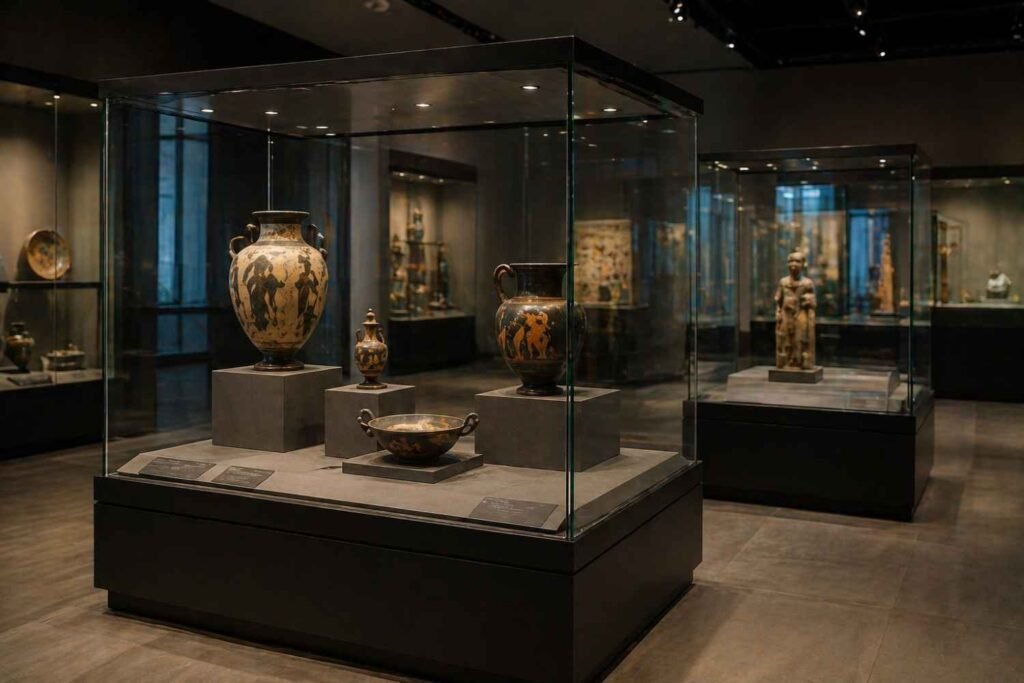
A normal display case only shows an item. A museum-quality display case protects it for years from slow damage caused by light, dust, air, and humidity.
Damage does not happen all at once. It builds slowly over time, and items can fade, weaken, or lose value without warning.
At Instant Display Cases, we use our custom plastic fabrication services in California to build cases that do more than display. They are made to protect items long-term and keep their condition stable.
If you are displaying something valuable, the case you choose will decide how well it lasts.
What “Museum-Quality” Really Means
A museum-quality display case is a sealed, controlled enclosure designed to protect valuable items from everyday environmental damage.
It controls:
- Light exposure
- Dust and air movement
- Humidity changes
- Physical handling
It is not just a display box. It is a protection system built around the item.
1. Museum-Grade Material Selection
Most damage starts with the wrong material choice.
Cheap plastics, adhesives, or untreated surfaces can slowly release gases that affect the item inside. This damage builds quietly over time.
Common long-term issues include:
- Paper turning yellow
- Colors fading
- Fabric weakening
- Metal losing finish
Museum-quality cases avoid this completely by using:
- High-grade, stable acrylic
- Sealed metal components
- Low-emission adhesives
- Internal barrier protection
Our custom-sized acrylic display cases in California are built with this focus first. Once damage starts, it cannot be reversed, so prevention is key.
2. UV-Protected Lighting System
Light looks harmless, but UV exposure slowly breaks down materials.
Over time, this leads to permanent fading and loss of detail.
A proper museum-quality case helps by:
- Blocking UV rays through acrylic
- Keeping lighting controlled and balanced
- Using LED lighting that does not heat the item
As an engraved LED display manufacturer in California, we design lighting systems that improve visibility while keeping items safe.
3. Sealed Dust and Air Protection
Air carries dust, moisture, and pollutants. If a display case is not sealed well, these slowly enter inside.
Our museum-quality cases are built with:
- Tight-fitting panels
- Sealed joints
- Precision-cut construction
This keeps the internal environment more stable and reduces long-term exposure.
4. Humidity-Stabilized Interior Design
Humidity changes are one of the most silent causes of damage.
They can lead to:
- Cracking in paint
- Warping in wood
- Curling in paper
A good display case slows this process by reducing air movement and stabilizing internal conditions.
5. Crystal-Clear Viewing Panels
A display case should not distort what is inside it. Museum-grade acrylic provides:
- Clear viewing from all angles
- Minimal reflection
- True color visibility
Better clarity also means better presentation, which increases attention and perceived value.
6. Heavy-Duty Structural Stability
A weak structure puts everything at risk. Museum-quality cases are designed with:
- Strong internal framing
- Balanced weight distribution
- Stable base support
As a wood pedestal manufacturer in California, we also design strong bases that keep displays steady even in busy environments.
7. Custom Internal Support Systems
Inside the case, the item must be properly supported.
Good support ensures:
- Even weight distribution
- No stress points
- Safe positioning
This is especially important for collectibles and Movie Props Displays in California, where condition directly affects value.
8. Anti-Tamper Security Features
Many items get damaged during handling, not display.
Museum-quality cases include:
- Locking systems
- Reinforced panels
- Controlled access points
For retail and public spaces, we also offer anti-smash designs that add protection without affecting visibility.
9. Fully Custom & Modular Build Options
A museum-quality case must be built for the specific object. That’s why we consider:
- Size and shape
- Material sensitivity
- Display environment
- Duration of use
We also provide modular interlocking acrylic display cases in California, so displays can be expanded or adjusted as needed.
Who Needs Museum-Quality Display Cases?
This is not limited to museums. It is important wherever value is involved.
- Collectors protecting rare items
- Galleries and exhibitions
- Retail stores with premium products
- Offices displaying awards or prototypes
- Studios using Movie Props Displays in California
Our team designs solutions based on what you are trying to protect, not just what you are trying to show.
Let’s Build the Right Display for You
If you are planning a display for something valuable, it is worth getting it right from the start.
We design and manufacture custom display cases across California, built to match your exact size, material, and protection needs. Whether it is for retail, collectibles, or exhibitions, the goal is simple. Keep the item safe and present it the right way.
Send us your measurements, photos, or idea, and our team will help you design a museum-quality solution that fits perfectly.
Call us to discuss your project.
Frequently Asked Question
What makes a display case museum-quality?
A museum-quality display case uses UV protection, safe materials, and a sealed design to control dust, air, and humidity.
Why is UV protection important?
UV light causes fading and damage over time. In our custom-size acrylic display cases in California, UV acrylic helps preserve colors and material quality.
Are acrylic display cases safe long-term?
Yes. We use durable acrylic through our custom plastic fabrication services in California that stays clear, strong, and resistant to damage.
Do museum-quality cases control humidity?
Yes. They reduce air exchange and help keep humidity more stable, which protects sensitive items over time.
What is the difference between regular and museum-quality cases?
Regular cases display items. Museum-quality cases also protect them. We design both display and support systems, including bases when needed.